






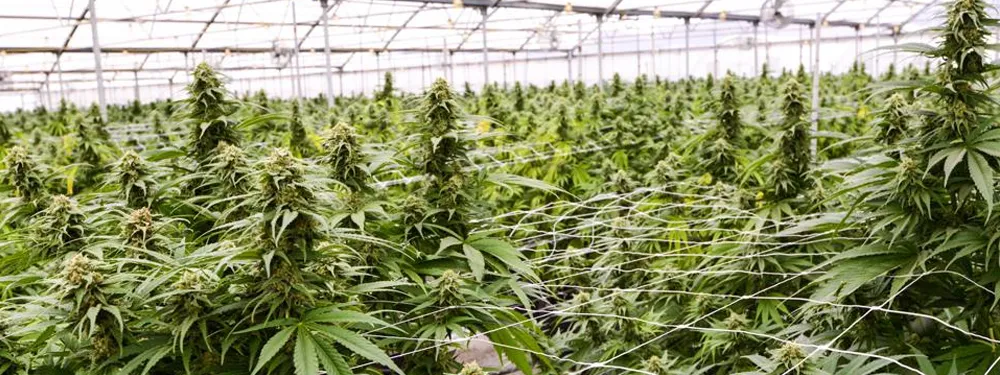




The federal hemp ban scheduled for November 12, 2026, could fundamentally reshape the U.S. hemp industry by making most consumable hemp products federally unlawful under a new total-THC standard.
Under Section 781 of Public Law 119-37, Congress changed the federal definition of hemp by adopting a total-THC standard and imposing an extremely low limit on finished hemp-derived cannabinoid products. President Donald Trump signed the legislation on November 12, 2025, and Congress provided a one-year implementation period.
When the new federal definition takes effect, a final hemp-derived cannabinoid product generally cannot contain more than 0.4 milligrams of combined total THC per container. That limit applies to the entire package, not each individual serving.
Industry advocates estimate that the new law could make approximately 95% of existing consumable hemp products federally unlawful. Potentially affected goods include full-spectrum CBD oils, hemp-derived THC drinks, gummies, flower, vape products and other popular cannabinoid products.
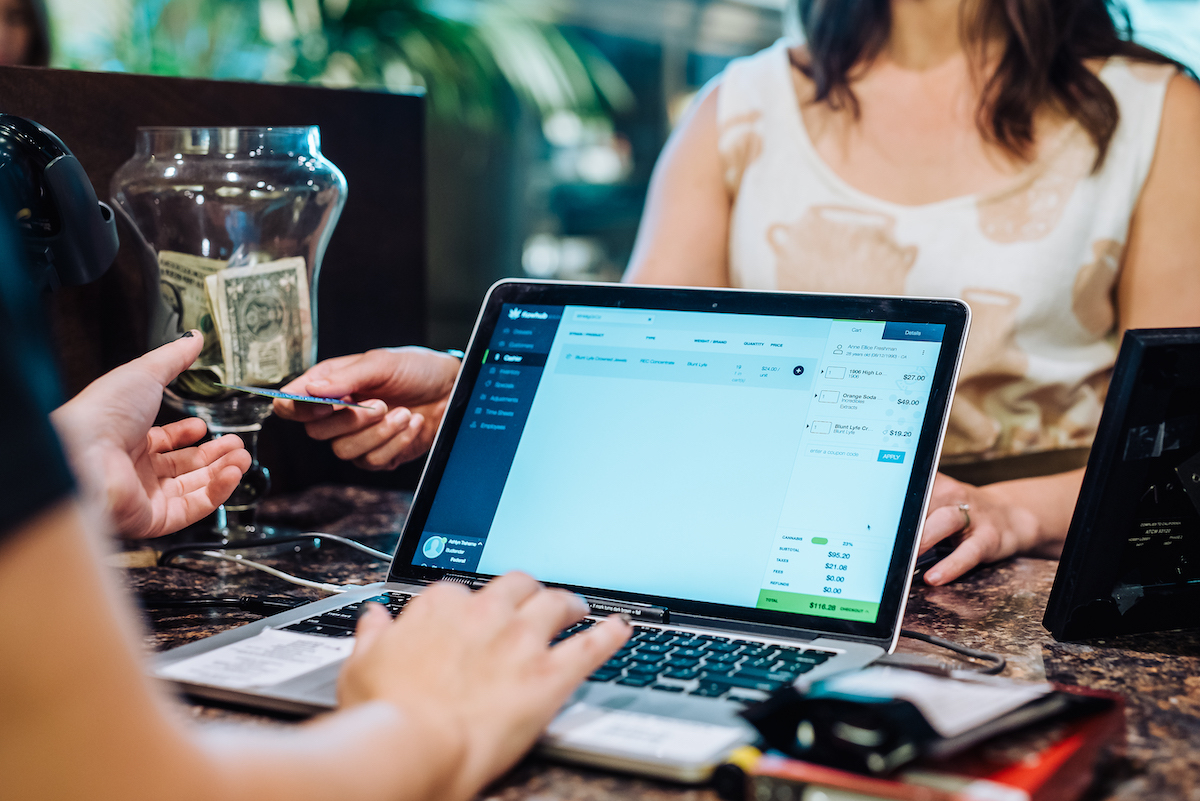
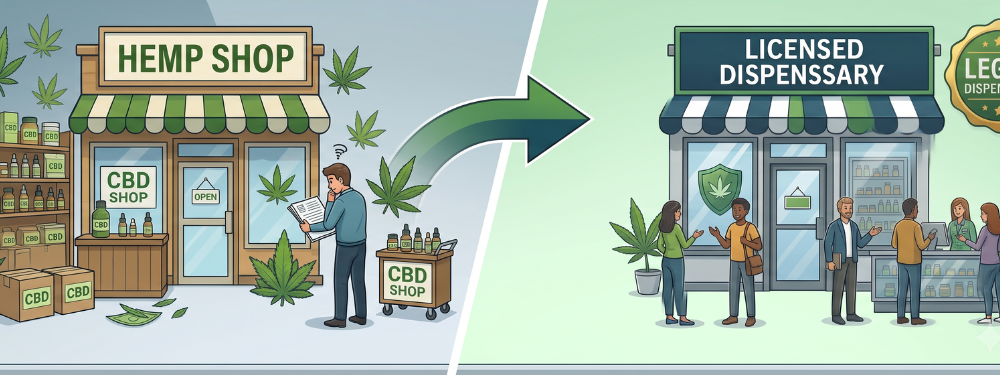
For hemp shop owners, small business operators in the hemp and cannabis sectors, policymakers and retailers weighing a move into the legal cannabis market, the deadline is not abstract. It puts revenue, inventory, licensing strategy and jobs at risk, forcing businesses to either shift to compliant products or evaluate whether conversion to a regulated dispensary is possible.
This guide examines the federal hemp ban, its legal and economic impact, how state responses and proposed rules may differ, what it takes for a hemp store to become a licensed dispensary, and the financing considerations involved in that transition.
For hemp shops, convenience stores, liquor stores and specialty retailers, the approaching deadline creates an urgent question:
Can an existing hemp shop transition into a licensed dispensary?
The answer depends on state law, licensing availability, local zoning and whether the state has a regulated medical or adult-use cannabis market.
What Does the Federal Hemp Ban Change?
As of the 2018 Farm Bill, legal hemp was defined as the Cannabis sativa L. plant and its derivatives containing no more than 0.3% delta-9 THC on a dry-weight basis.
That definition focused primarily on delta-9 THC. It did not fully account for other psychoactive cannabinoids, intoxicating isomers, or products manufactured by converting hemp-derived CBD into compounds such as delta-8 THC.
The new federal definition uses a broader total THC standard. It includes THC and tetrahydrocannabinolic acid, or THCA, when determining whether the cannabis plant and certain intermediate products qualify as hemp.
The definition generally limits plants and intermediate hemp-derived cannabinoid products to 0.3% total THC on a dry-weight basis. It also excludes certain cannabinoids synthesized or manufactured outside the plant.
Final hemp-derived cannabinoid products face the separate 0.4-milligram-per-container limit. Products above that limit would no longer qualify for the federal hemp exemption, creating significant legal exposure under the Controlled Substances Act. (congress.gov)
Industrial hemp grown for fiber, grain, seed oil, and certain non-cannabinoid applications receives separate treatment under the new statutory definition. The greatest commercial risk falls on consumable hemp products containing cannabinoids for ingestion, inhalation, or topical use.
Why Is the Farm Bill Leading Congress to Restrict Hemp-Derived THC Products?
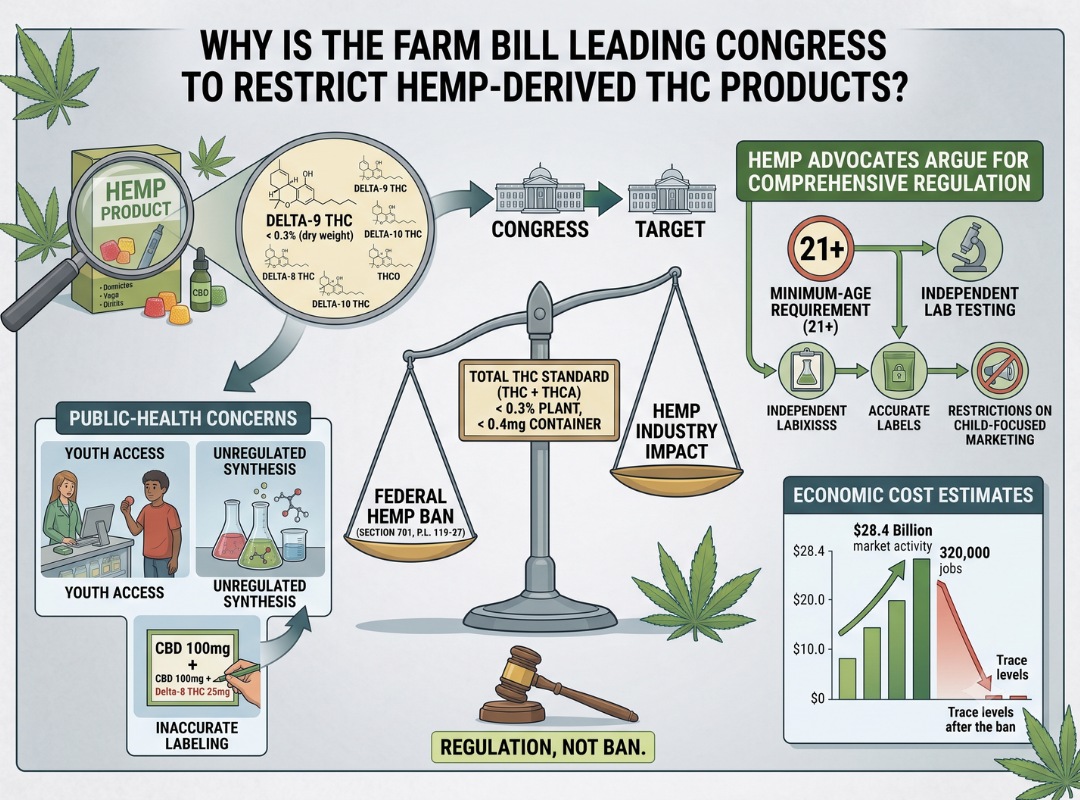
Supporters of the new law argue that, driven by public-health concerns, especially youth access, the 2018 Farm Bill unintentionally created a national market for intoxicating hemp products without consistent federal manufacturing and retail standards.
Many jurisdictions did not initially require standardized age restrictions, child-resistant packaging, testing or potency limits for hemp-derived THC products. Products were sometimes sold through convenience stores and other retail channels that were not regulated like state-licensed cannabis dispensaries.
Lawmakers and regulators have also raised concerns about cannabinoid synthesis. Converting CBD into intoxicating compounds without uniform manufacturing standards can create consumer-safety risks involving potency, contaminants, residual chemicals and inaccurate labeling. Reclassifying popular intoxicating isomers can also create legal risks for consumers when product labeling, potency and compliance standards are unclear.
These are legitimate issues, but hemp advocates argue that comprehensive regulation would be more effective than a broad federal ban.
The hemp industry has supported policies such as minimum-age requirements, independent laboratory testing, accurate labels, restrictions on child-focused marketing and child-resistant packaging to better protect consumers. A bipartisan group of lawmakers previously advocated for this type of regulatory approach rather than redefining most consumable products as marijuana. (comer.house.gov)
What Could the Federal Hemp Ban Cost the Hemp Industry?
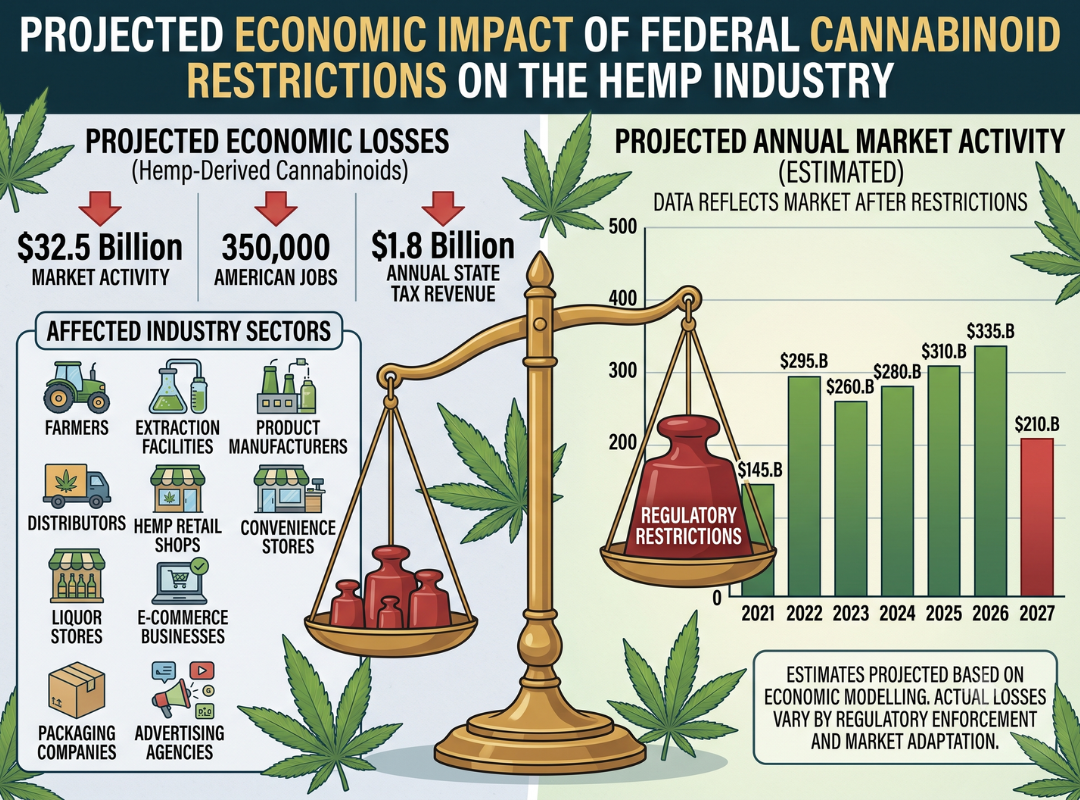
The potential economic impact extends well beyond stores specializing in hemp-derived THC.
Industry data cited by federal lawmakers estimates that the hemp-derived cannabinoid market supports approximately 320,000 American jobs, generates about $28.4 billion in market activity and produces roughly $1.5 billion in annual state tax revenue. (hempsupporter.com)
Those numbers are industry estimates rather than guaranteed outcomes. However, they demonstrate the scale of the agricultural and commercial landscape connected to hemp products.
Potentially affected businesses include:
- Hemp farmers and licensed growers
- Extraction and processing facilities
- Product manufacturers
- Independent laboratories
- Packaging companies
- Hemp beverage brands
- Distributors and wholesalers
- Retail hemp shops
- Convenience and liquor stores
- E-commerce businesses
- Marketing and logistics providers
Farmers also face crop-planning uncertainty. Planting decisions must be made months before harvest, but the products that will remain commercially viable after November 12, 2026, may depend on whether Congress changes the law.
A farmer cannot immediately change an entire growing season after federal enforcement standards take effect. Without regulatory certainty, some growers may reduce acreage, change cultivars or leave cannabinoid production altogether.
Can a Hemp Shop Become a Legal Dispensary?
A hemp retailer cannot automatically become a legal dispensary simply by changing its sign or product inventory.
Marijuana businesses operate under state-specific licensing systems. A store must obtain the appropriate cannabis license before possessing or selling regulated marijuana products.
The path is most realistic in states that:
- Permit adult-use or medical marijuana sales
- Are accepting new dispensary applications
- Offer conversion or priority licenses to existing hemp businesses
- Allow the proposed location to operate as a cannabis retailer
- Permit the business’s owners and investors to participate
- Have a legal supply chain capable of serving the store
Existing hemp inventory generally cannot be transferred into the regulated marijuana market. State-licensed dispensaries typically must purchase inventory from approved cultivators, manufacturers or distributors and record it in the state’s tracking system.
The process of taking a hemp shop to dispensary status is therefore a licensing, compliance and capitalization project—not a simple retail conversion.
Delaware Could Create a Hemp-to-Dispensary Path
Delaware is considering one of the clearest examples of a formal hemp-shop-to-dispensary transition.
House Bill 395 would move qualifying intoxicating cannabinoid products into Delaware’s regulated marijuana system. The proposal responds to concerns that certain products have been sold without adequate age gating, testing, labeling and potency controls. (legis.delaware.gov)
An amendment passed by the Delaware House on June 16, 2026, would allow qualifying hemp retailers to pursue retail marijuana store licenses. The Marijuana Commissioner would be directed to open an application period and issue up to 20 licenses to eligible applicants. (legis.delaware.gov)
Eligibility would depend partly on demonstrating good-faith compliance with law-enforcement directives to stop selling products containing more than 0.4 milligrams of total THC per container.
As of August 3, 2026, the underlying legislation remains pending in the Delaware Senate Health and Social Services Committee. The conversion opportunity is therefore a proposal, not an active licensing program. (legis.delaware.gov)
If enacted, Delaware could provide a model for other states looking to move existing hemp businesses into a licensed cannabis industry instead of forcing them to close.
Why Texas Hemp Shops Face a Different Situation
Texas should not be described as having enacted a complete statewide hemp ban.
The Texas Legislature passed Senate Bill 3 in 2025, but Governor Greg Abbott vetoed it on June 23, 2025. The proposed law would have prohibited consumable products containing cannabinoids other than CBD or CBG. (gov.texas.gov)
After additional legislative efforts stalled, Governor Abbott issued Executive Order GA-56 on September 10, 2025. The order directed state agencies to develop stronger age-verification, testing, labeling, licensing and consumer-protection standards for hemp-derived products. (gov.texas.gov)
Texas hemp shops also face a structural obstacle: Texas does not have a general adult-use marijuana market.
A Texas retailer cannot currently convert an ordinary hemp registration into a recreational dispensary license. Any marijuana opportunity must fit within the state’s limited medical cannabis program or a future licensing structure created by state law.
Texas businesses may instead need to concentrate on compliant, non-intoxicating hemp products, pursue ancillary cannabis services or prepare for a future medical or adult-use licensing opportunity.


Recent Comments