



















A delayed customer payment or unexpected expense can leave a profitable business without enough available cash to meet its next payroll deadline. When employee wages, payroll taxes, and benefits are due before revenue reaches your business bank account, payroll financing may help bridge the gap.
Business loans for payroll provide access to capital that can be used to pay employees and related operating expenses. Depending on the financing product, eligible businesses may receive funds quickly, sometimes within one business day after approval and completion of all required documentation.
However, borrowing to cover payroll creates a new repayment obligation. Small business owners should understand the costs, payment terms, and source of repayment before accepting an offer.
What Is a Payroll Loan?
A payroll loan is business financing used to cover employee wages and other payroll-related costs during a temporary cash flow shortage.
“Payroll loan” is generally an umbrella term rather than one specific financing product. Payroll funding may come from a short-term business loan, working capital financing, a business line of credit, invoice financing, or another commercial financing product.
A term loan normally provides a lump sum that the business repays according to an agreed schedule. A business line allows the company to draw funds as payroll needs arise, subject to its available credit limit.
What Can Payroll Financing Cover?
Businesses may use approved funds to cover payroll expenses such as:
- Employee wages and salaries
- Overtime and commissions
- Payroll taxes
- Employee benefits
- Contractor payments, when permitted
- Insurance expenses associated with employees
- Other operating expenses related to maintaining the workforce
Confirm permitted uses with the lender before borrowing. Financing agreements can contain restrictions on how the funds may be used.
Employers must deposit and report applicable employment taxes on time. Late or insufficient federal tax deposits can result in penalties, making it important to calculate wages and tax obligations when determining total payroll needs.
When Do Businesses Need Payroll Funding?
Even healthy businesses can experience cash flow gaps when outgoing payments and incoming revenue do not follow the same schedule.
For example, a construction company may need to pay its team biweekly while waiting 30 to 90 days for clients to pay. A retailer may have invested available cash in inventory before a seasonal sales period. A service business may have completed its work but still have significant accounts receivable outstanding.
Other common reasons businesses seek payroll financing include:
- Delayed customer payments
- Seasonal revenue changes
- Unexpected equipment repairs
- Rapid hiring for a new contract
- Emergency operating expenses
- A temporary decline in monthly revenue
- Inventory purchases that reduce available cash
- Business expansion before new revenue arrives
Payroll funding can address a temporary timing problem, but it may not resolve a recurring profitability issue.
Why Making Payroll on Time Matters
Employees depend on receiving their wages when promised. Missing or delaying payroll can reduce employee morale, damage confidence in management, and cause experienced team members to seek employment elsewhere.
Maintaining timely payroll can help keep a business fully staffed during short-term financial distress. It can also prevent service disruptions, missed orders, and project delays caused by employee turnover.
Financing can provide temporary relief while management collects outstanding invoices, reduces unnecessary costs, or corrects an underlying cash flow problem.
Best Business Loans for Payroll
The best payroll business loan depends on how much the business needs, how quickly it needs the money, and how it expects to repay the funds.
Business owners should compare the following financing options before deciding.
1. Short-Term Business Loans
A short-term loan delivers a lump sum of capital that can be used for payroll and other approved business operations.
Short-term loans are often designed for immediate financing needs and may have a faster application process than traditional bank loans. Upwise working capital options may have repayment terms ranging from three to 18 months, although the exact term depends on approval and the selected product. (upwisecapital.com)
This option may work when the business knows exactly how much it needs and has a predictable source of repayment, such as a large customer payment expected within the loan term.
Because short-term financing can carry higher fees and borrowing costs than longer-term debt, businesses should evaluate the total repayment amount—not only the payment size.
2. Business Line of Credit
A business line of credit gives a company flexible access to capital up to an approved limit. The business can draw funds when a payroll shortfall occurs instead of applying for a new loan each time.
A line of credit may be appropriate for recurring or unpredictable cash flow gaps. For example, a company could draw enough to cover payroll, repay the balance when customer payments arrive, and maintain access to the credit line for future needs.
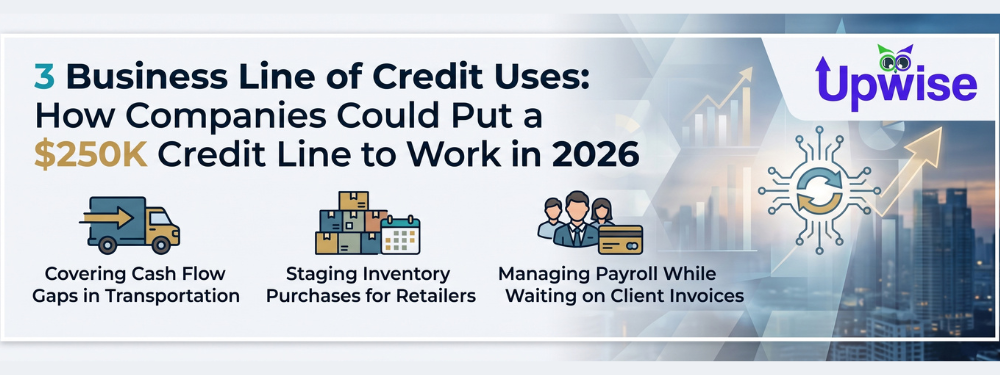
Interest or financing costs generally apply only to the funds drawn, although account, origination, or draw fees may also apply. Upwise currently describes business lines of credit with limits from $5,000 to $250,000 and terms from six to 24 months, based on approval.
3. Working Capital Financing
Working capital financing helps businesses pay for short-term operating expenses such as payroll, rent, inventory, marketing, and vendor payments.
This option can provide quick access to flexible business financing without adding long-term debt to the business. Depending on the financing structure, repayment may occur daily, weekly, or monthly.
Businesses should review how frequent payments will affect their business bank account. A product that provides immediate relief could create another cash flow problem if its payments are too aggressive.
4. Invoice Financing
Invoice financing allows eligible businesses to borrow against unpaid customer invoices.
This can be useful when the company has completed its work but must cover employee wages before its clients pay. Accounts receivable help support the financing, and the customer’s creditworthiness may influence eligibility.
Upwise reports that eligible businesses may access up to 95% of qualified invoice value, with possible funding timelines of 24 to 72 hours. Actual advance rates and funding times depend on the invoices, customers, documentation, and financing provider.
Invoice factoring is a related option in which a business sells qualifying invoices to a factoring company. Unlike standard accounts receivable financing, the factoring company may take responsibility for collecting payment.
5. Revenue-Based Financing or Business Cash Advances
Revenue-based financing and business cash advances provide capital based partly on the company’s sales or deposits.
A merchant cash advance typically provides a lump sum in exchange for a percentage of future business revenue or an agreed payment amount. It may offer quick access to funds, but costs can be higher than other financing options.
Review the factor rate, total payback amount, payment frequency, reconciliation provisions, fees, and expected effect on daily cash flow before accepting this type of financing.
6. SBA 7(a) Working Capital Loans
SBA 7(a) loans can be used for short- and long-term working capital. They may offer competitive interest rates and longer payment terms for qualified borrowers.
However, SBA loans generally involve more documentation and a longer approval process. They may be better for planned working capital needs than for payroll due within the next several days.







Recent Comments