The Role of a Business Bank Account
A dedicated business bank account helps separate company funds from personal money. It also gives the lender a clearer record of operating revenue, expenses, and available cash.
The account name should match the legal company or recognized DBA listed on the application. Ownership details, tax identification information, and contact records should also be accurate and consistent.
After approval, the lender may send money directly to the business bank account or another designated business account. Repayments may then be withdrawn automatically according to the signed agreement.
Documents to Prepare
A complete application may require government-issued identification, a voided business check, recent bank statements, ownership information, tax identification details, and evidence of the company’s operating address.
Larger loans may require tax returns, profit-and-loss statements, a balance sheet, accounts receivable reports, debt schedules, or a detailed plan for using the capital.
Preparing documents before selecting “apply online” can reduce delays or errors in a streamlined funding application that collects basic business details, funding purpose, and uploaded statements. A fast application becomes slow when the support team must repeatedly request missing information. (https://upwisecapital.com/funding-application)
Common Loan Amounts
Fast business loans can cover relatively small expenses or major growth projects. Available amounts depend on the lender, product, revenue, risk, and borrower qualifications.
Some online term-loan products advertise funding from approximately $5,000 to $300,000. PayPal Business Loan currently advertises amounts from $5,000 to $200,000 for initial borrowers and up to $300,000 for qualifying repeat borrowers. (paypal.com)
Do not chase big numbers simply because a lender offers a large account size. Borrow only the funds the company can deploy productively and repay without weakening its operating balance.
Short-Term Repayment Periods
Short-term business loans may have repayment terms lasting a few months to approximately two years. Certain products have even shorter schedules.
PayPal Business Loan, for example, currently lists durations of 17 to 52 weeks, depending on eligibility and loan amount. That illustrates why borrowers must review product-specific terms rather than assuming every loan offers 3 to 24 months. (paypal.com)
A shorter term can reduce the time a company remains in debt, but it can also increase each payment. The right structure balances speed, total cost, and cash flow capacity.
Weekly Payments
Weekly payments are common with fast online loans. Instead of making one monthly payment, the borrower authorizes smaller automatic withdrawals every week.
This structure can help a business manage predictable repayment, but it also leaves less time to recover from a weak sales period. Seasonal companies should test the payment against conservative revenue projections.
PayPal’s Business Loan currently uses automatic weekly payments from the borrower’s business bank account. Borrowers can select a preferred payment day but cannot change the weekly frequency. (paypal.com)
Interest, Factor Rates, and Fees
A traditional loan is often priced using an interest rate or annual percentage rate. Other business funding products may use a fixed fee or factor rate instead.
A factor rate should not be mistaken for an interest rate. Multiplying the advance by the factor may show the total payback, but it does not communicate the annualized cost by itself.
Ask the lender to disclose the total amount received, total amount repaid, payment frequency, origination fees, late fees, returned-payment fees, prepayment policy, and estimated annualized cost where available.
Avoiding a Debt Cycle
A debt cycle can begin when a company repeatedly renews short-term loans to cover existing payments. Each advance produces temporary cash but adds another repayment obligation.
Warning signs include using new funds to pay old debt, refinancing before the business has generated a return, and maintaining insufficient cash for taxes or payroll after daily withdrawals.
Before renewing, determine why the original funding failed to produce enough profit. Additional capital cannot permanently solve low margins, weak demand, uncontrolled expenses, or an ineffective business plan.
What Is an Instant Line of Credit?
An instant line of credit is a revolving financing option that allows a company to borrow up to an approved credit limit, such as the flexible business lines of credit that let borrowers pay interest only on funds drawn. Unlike a term loan, the business generally does not receive the entire line automatically. (https://upwisecapital.com/apply-now-loc/)
The borrower can draw funds when needed, repay the balance, and access the line again if the account remains open and in good standing. This structure can provide flexible support for recurring expenses.
Although approval may be fast, continued access can be subject to lender reviews, renewal rules, account activity, and changing market conditions.
How a Business Line of Credit Works
Suppose a company receives a $75,000 line but draws only $20,000. It generally pays interest or financing costs on the amount used rather than the untouched portion of the credit line.
After the company repays the $20,000, that capital may become available again. This revolving access makes a line useful for inventory purchases, customer payment delays, seasonal expenses, and short-term working capital.
Some lenders also charge draw fees, maintenance fees, inactivity fees, or renewal costs. Review the complete agreement before assuming unused credit is free.
Secured and Unsecured Lines
Lines of credit can be secured or unsecured. A secured line may be backed by inventory, receivables, equipment, deposits, or another company asset.
An unsecured line does not require a specific pledged asset, but approval may rely heavily on creditworthiness and revenue. The lender may also require a personal guarantee.
SBA guidance similarly notes that unsecured business funding is supported by creditworthiness rather than specific collateral and that many lenders still require personal guarantees. (sba.gov)
Instant Business Loan vs. Instant Line of Credit
An instant business loan is usually better for a defined, one-time cost. The company receives a lump sum and repays it according to a set schedule.
An instant line of credit may be better for repeated or unpredictable needs. The business can borrow, pay down the balance, and draw again instead of completing a new loan application every time.
The line offers flexibility, while the term loan offers certainty. Compare the approved amount, access rules, cost, repayment frequency, fees, and intended use before choosing.
Other Business Funding Options
Fast financing is a category, not a single product. A responsible borrower should explore multiple solutions before committing to one lender, including flexible business financing options such as lines of credit, SBA loans, and equipment financing designed for different needs. (https://upwisecapital.com/business-funding/)
The best option depends on why the business needs money, how quickly it can generate a return, and whether repayments will come from daily sales, monthly revenue, unpaid invoices, or another identifiable source.
Business Term Loans
A term loan provides a fixed amount that is repaid over an agreed period. Payments may be daily, weekly, or monthly.
Term loans are useful for planned purchases with a clear budget, such as renovations, expansion, marketing, or hiring. They also provide a defined payoff date.
Review whether the rate is fixed or variable and whether early payment reduces the cost. With a fixed-fee product, paying early may not generate the expected interest savings.
Working Capital Loans
A working capital loan supports day-to-day operational expenses. Common uses include payroll, inventory, rent, supplier payments, advertising, and temporary cash flow gaps.
This financing should create enough operational value to justify its cost. Borrowing for ordinary expenses without a plan to increase revenue or reduce costs can weaken the company’s financial position.
Match the payment schedule to the operating cycle. A business paid monthly by customers may struggle with a product requiring aggressive daily deductions.
Merchant Cash Advances
A merchant cash advance provides upfront cash in exchange for an agreed amount linked to future business sales. Repayment may occur through a percentage of card receipts or fixed ACH withdrawals.
The CFPB describes merchant cash advances as sales-based financing typically repaid through future revenue, card-processor deductions, or withdrawals from the merchant’s bank account. (consumerfinance.gov)
This advance may offer fast funding and flexible qualification, but the cost can be substantial. Compare total payback and cash flow impact with conventional loan and line-of-credit offers.
Invoice Financing
Invoice financing allows a business to access capital based on unpaid customer invoices. It can help companies waiting 30, 60, or 90 days for customers to pay.
Because the receivable supports the transaction, approval may focus on the quality of the invoices and the customers responsible for payment.
Costs may include discount fees, service fees, or interest. Businesses should also determine whether customers will be notified and who will manage collection.
Equipment Financing
Equipment financing helps a company purchase machinery, vehicles, technology, or other necessary equipment while preserving available cash.
The equipment often serves as collateral, which can reduce lender risk. Terms may be aligned with the expected useful life of the asset.
This option may be more appropriate than an unsecured instant business loan when the complete purpose of the funds is a specific equipment purchase.
SBA Loans
SBA loans are a common source of small business financing. The SBA does not typically lend directly for ordinary business purposes; approved lenders issue loans supported by a government guarantee and a range of SBA programs that can offer lower interest rates and longer terms for qualified borrowers. (https://upwisecapital.com/sba-loans/)
The SBA identifies 7(a), CDC/504, and Microloan as its three primary business loan programs. These options can support working capital, acquisitions, equipment, and other eligible purposes. (sba.gov)
SBA financing may offer lower-cost capital and longer terms than many instant loans, but the application and underwriting process is generally slower. It is better suited to planned growth than an immediate emergency.
PayPal Business Funding
PayPal offers more than one financing structure. Its Business Loan provides fixed-term funding with weekly payments, while PayPal Working Capital is repaid with a percentage of eligible PayPal sales.
Qualified PayPal Business Loan applicants may receive funds as soon as the next business day after approval. PayPal Working Capital states that approved funds can reach the borrower’s PayPal Business account within minutes. (paypal.com)
Eligibility, availability, loan amount, credit checks, and repayment rules differ between the two products. Applicants should compare current disclosures before proceeding.
Upwise Capital and Fast Funding
Upwise Capital presents a marketplace of business funding products, including lines of credit, term loans, working capital, equipment financing, invoice financing, and SBA options.
Its published pages advertise possible same day or 24-hour funding for certain qualified applicants. Public qualification examples vary by product and page, confirming that one universal credit score or revenue threshold does not apply to every offer. (upwisecapital.com)
Any “as fast as” statement describes a potential timeline, not a guarantee. Approval and funding remain subject to the selected lender, completed documents, banking hours, and final underwriting.
The Same Day Funding Process
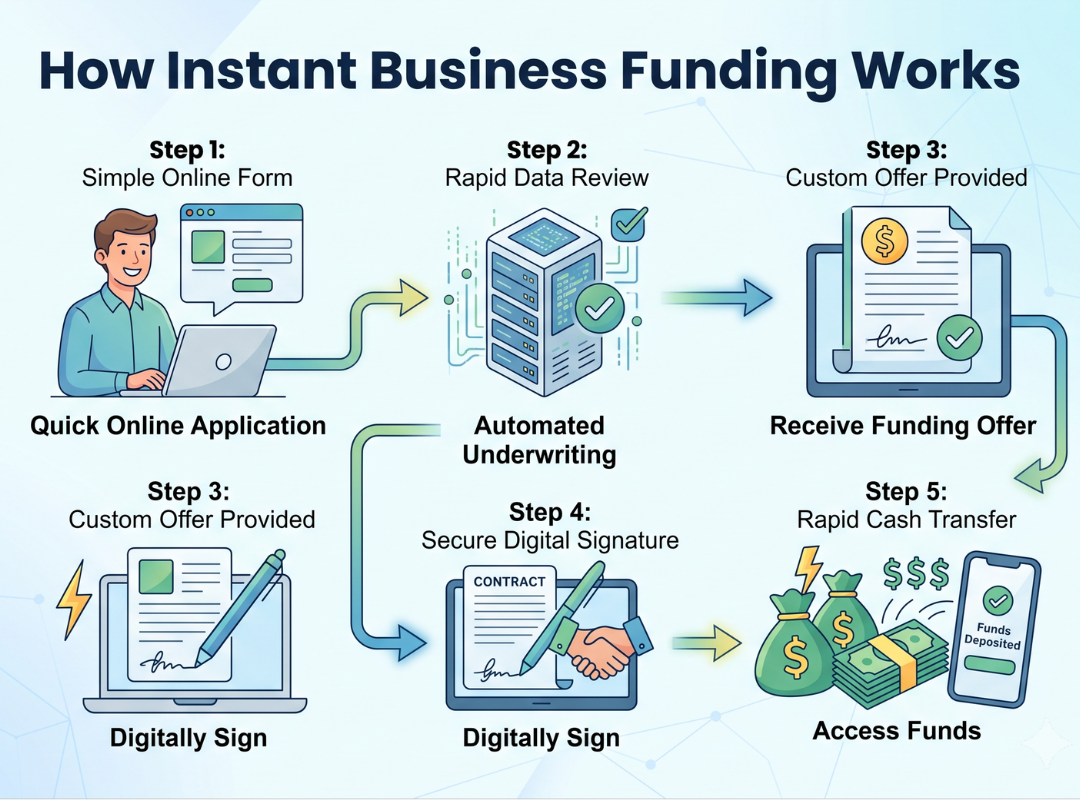
To improve the chance of same day funding, apply early, use accurate information, and prepare every requested document before beginning.
After approval, read the agreement completely. Confirm the amount that will reach the account, total repayment, payment dates, fees, security interests, and personal guarantee.
Sign promptly only when the offer fits the company’s plan. Speed should never replace due diligence.
Automated Underwriting
Automated underwriting systems enable lenders to evaluate applications quickly. They can analyze bank transactions, deposit patterns, credit data, negative balances, and existing payment obligations.
Automation may generate a decision in minutes, but unusual activity can trigger manual review. Large transfers, unexplained cash deposits, mismatched information, and repeated overdrafts may require clarification.
A support team or funding manager may contact the applicant to verify details. Responding quickly can prevent the file from moving past a same-day funding cutoff.
Improving Approval Chances
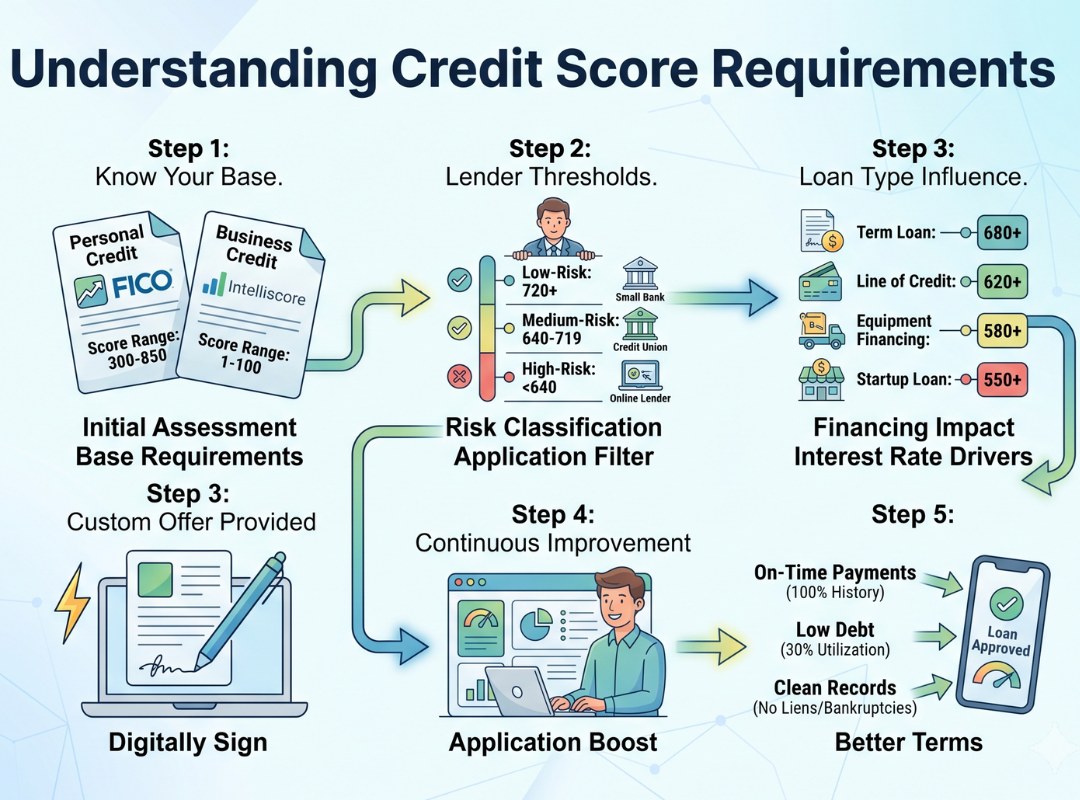
Maintain a positive bank balance and avoid unnecessary overdrafts before applying. Stable deposits and controlled expenses can demonstrate that the company knows how to manage cash.
Reduce avoidable debt, correct credit-report errors, and organize the latest bank statements. Do not submit conflicting revenue figures across multiple forms.
Request a realistic amount. A smaller, well-supported request may be easier to approve than a large advance that exceeds the company’s repayment capacity.
Calculating a Safe Borrowing Amount
Start with the expected return from the funds. Estimate the additional revenue, gross profit, and timing of customer payments.
Next, subtract the financing cost and related operating expenses. The plan should still produce a meaningful profit after repayment.
Stress-test the payment against weaker market conditions. If a modest sales decline would cause missed payroll or an overdrawn bank account, the proposed loan is too aggressive.
Productive Uses of Funds
An instant business loan can support inventory with proven customer demand, an emergency repair, a profitable contract, marketing with measurable results, or a temporary timing gap.
A line of credit can provide ongoing access for seasonal purchases, delayed invoices, and recurring working capital needs.
Avoid borrowing without a defined purpose. Every dollar should have a job, an expected return, and a realistic path to repayment.
Comparing Funding Offers
Compare offers using the same requested amount and repayment period. Looking only at the weekly payment can hide a higher total cost.
Ask each lender for the net funds received, total payback, number of payments, payment amount, fees, collateral, guarantee, and early-payment policy.
A reliable lender or broker should explain the rules clearly and provide support without pressuring the customer to sign immediately.
Red Flags to Avoid
Be cautious if a company promises guaranteed approval, demands a large upfront payment, refuses to disclose the lender, or will not provide written terms.
Avoid representatives who ask you to misstate revenue, alter bank statements, or describe business income inaccurately. False information can lead to rejection, default, or legal consequences.
Also verify that the lender can explain the cost in plain language. “Instant access” and “fast funding” should not be used to conceal expensive or confusing terms.
Business Funding Is Not Prop Trading
A funded account in prop trading is different from a funded business bank account. A prop firm may provide traders with access to an account after they satisfy an evaluation, profit target, and trading rules.
Prop trading programs may discuss account size, profit split, first payout, market position limits, and real market conditions. These concepts do not describe an instant business loan or instant line of credit.
A trading strategy also carries market risk and does not create a predictable source of loan repayment. Business owners should not borrow expensive short-term money to chase a prop firm evaluation, payout, or speculative trading profit.
A Practical Application Plan
First, identify the exact amount, purpose, and date by which the company needs capital. Determine whether same day funding is essential or simply convenient.
Second, compare an instant business loan with an instant line of credit and slower, potentially lower-cost alternatives. Calculate how each payment affects cash over the next few months.
Finally, complete the application accurately, upload current documents, review the offer, and ask the support team to explain unclear terms before signing.
Frequently Asked Questions
Can I Get an Instant Business Loan With a 500 Credit Score?
Possibly. Some alternative funding programs consider applicants with scores near 500, but approval is not automatic. Revenue, deposit history, time in business, existing obligations, industry, and cash flow also matter.
Are $15,000 in Monthly Deposits Always Required?
No. Some fast financing programs use approximately $15,000 as a guideline, while others accept less or require substantially more. Always check the requirements for the specific lender and product.
Will I Need Several Months of Bank Statements?
Usually. Many fast lenders request the latest three to six months of business bank statements. Larger or more complex transactions may require additional financial records.
Can I Receive Funds on the Same Day?
Qualified applicants may receive same day funding when applications, documents, approval, and contract signing are completed before the lender’s cutoff. Otherwise, funding may arrive the next business day or later.
Is an Instant Line of Credit Better Than a Loan?
It is better for recurring, uncertain, or seasonal needs. A term loan may be preferable when the business has one defined purchase and wants a predictable repayment plan.
Are Instant Business Loans Expensive?
They can be. Faster approval, weaker credit requirements, and shorter terms often produce higher borrowing costs than traditional bank or SBA financing. Compare total repayment instead of focusing only on speed.
Final Thoughts on Instant Business Funding
An instant business loan can provide valuable capital when a company needs to act quickly. An instant line of credit can offer even greater flexibility by allowing the business to draw money only when necessary.
However, instant funding should support a profitable business decision rather than postpone an underlying financial problem. The approved amount, fees, interest, payment schedule, personal guarantee, and cash flow impact all deserve careful review.
Explore several financing options, ask direct questions, and borrow only what the business can manage. The right funding should strengthen the company’s position—not create a payment burden that limits future growth.
























Recent Comments