


















What Is a W2 Employee? Understanding Employee Classification

Navigate
When it comes to understanding your role in the workforce, knowing what is a W2 employee is essential for both workers and employers alike. Whether you’re starting a new job, running a business, or simply trying to understand your tax obligations, understanding the distinction between a W2 employee and other worker classifications can have significant implications for your taxes, benefits, and legal protections.
In this comprehensive guide, we’ll explore everything you need to know about W2 employees, how they differ from independent contractors, the benefits and responsibilities involved, and how the Internal Revenue Service determines worker classification.
Understanding the Basics: What Is a W2 Employee?
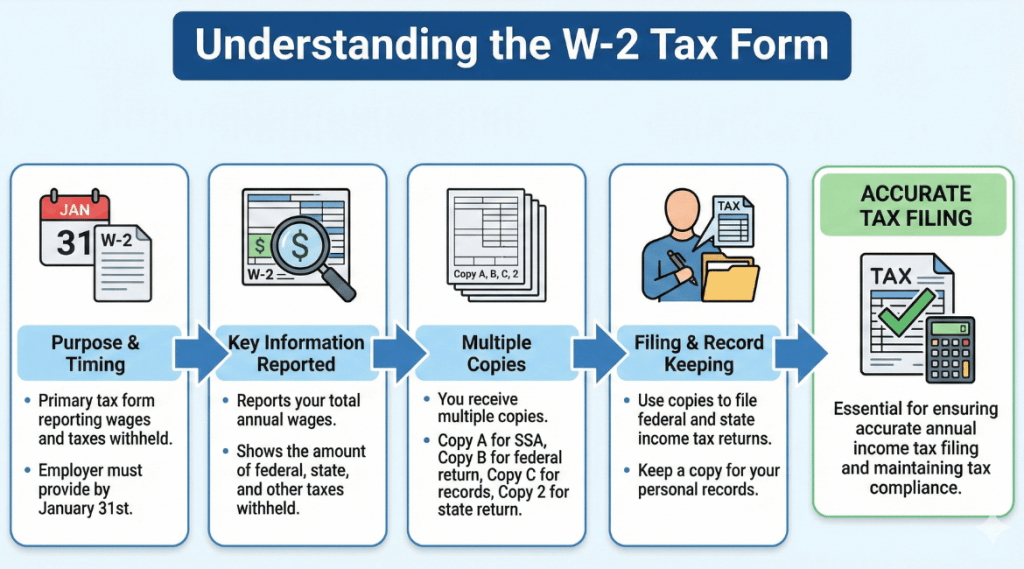
A W2 employee, also known as a W2 employee, is a worker who is formally employed by a company or organization under a traditional employer-employee relationship. The term “W2” comes from the Form W-2, also known as the Wage and Tax Statement, which employers are required to provide to each employee at the end of the year. This tax form reports the employee’s annual earnings and the amount of taxes withheld from their paychecks throughout the year.
Unlike an independent contractor, who operates as a self employed individual, a w 2 employee works under the direct supervision and control of an employer. The employer sets the work hours, provides the tools and resources needed to complete the job, and maintains significant behavioral control and financial control over how the worker performs their duties. W-2 employees are generally hired for an indefinite amount of time to complete ongoing work, while 1099 workers are often hired for specific projects or limited time. W-2 employees generally have less control over how and when work is performed compared to 1099 workers, who set their own schedules.
When you’re classified as a W2 employee, your employer is responsible for withholding federal income tax, social security taxes, and medicare taxes from your wages. The employer also contributes their portion of social security and medicare taxes on your behalf, which is a key aspect of this employment arrangement.
The Form W-2: Your Wage and Tax Statement Explained
The Form W-2 is a critical document that every W2 employee receives from their employer by January 31st of each year. This tax form provides a detailed breakdown of your income and all taxes withheld during the previous tax year.
Your Form W-2 includes important information such as:
Your total wages and compensation
Federal income tax withheld
Social security taxes withheld
Medicare taxes withheld
State and local taxes withheld
Contributions to retirement savings plans
Health insurance premiums (if applicable)
This wage and tax statement is essential when you file tax returns, as it provides the Internal Revenue Service with accurate information about the employee’s annual earnings and tax status. Both you and the IRS receive copies of this tax form, ensuring tax compliance and accurate reporting of your income.
The employee’s annual earnings documented on the Form W-2 must match what you report on your tax return. Any discrepancies can trigger an audit from the Internal Revenue Service, so it’s crucial to review your tax statement carefully before filing.
W2 Employee vs. Independent Contractors: Key Differences
Understanding the key differences between a W2 employee and independent contractors is crucial for both workers and businesses. The distinction affects everything from how taxes are paid to what benefits you’re entitled to receive.
Behavioral Control
One factor that distinguishes a W2 employee from independent contractors is the level of behavioral control the employer has over the worker. When an employer sets specific instructions about when, where, and how to complete work, this indicates an employer employee relationship consistent with W2 employment.
For a W2 employee, the business controls many aspects of their daily work, including:
-
When and where the work is performed
-
What tools or equipment to use
-
What order or sequence to follow
-
Where to purchase supplies and services
-
The specific duties and expectations related to the worker’s job, including how the worker’s job should be performed and evaluated
Independent contractors, on the other hand, typically have more control over how they complete their work. They may work from their own office space, set their own schedules, and determine the methods used to achieve the desired results.
Financial Control
Financial control is another critical factor in determining worker classification. A W2 employee typically receives a regular salary or hourly wage, with the employer responsible for providing all necessary equipment, materials, and office space.
Independent contractors usually invest in their own equipment, may work for other businesses simultaneously, and have the opportunity for profit or loss based on their business decisions. This financial independence is a key aspect that separates them from traditional employees.
The Internal Revenue Service examines financial control by looking at:
Whether the worker has unreimbursed business expenses
The worker’s investment in facilities or equipment
Whether the worker makes their services available to other businesses
How the worker is paid (regular wages vs. flat fee)
Whether the worker can realize a profit or loss
Type of Relationship
The entire relationship between the worker and the business also matters when determining classification. Written contracts, employee benefits, and the permanency of the relationship all play a role in establishing whether someone is a W2 employee or an independent contractor.
A W2 employee typically has:
An ongoing, indefinite relationship with the employer
Access to employee type benefits like health insurance and retirement savings plans
Work that is a key aspect of the regular business
Independent contractors often work on specific projects with a defined end date and don’t receive employee benefits from the businesses they serve.
Common Law Rules and Worker Classification
The Internal Revenue Service uses common law rules to determine whether a worker should be classified as a W2 employee or an independent contractor. These rules examine the entire relationship between the worker and the business, focusing on three main categories: behavioral control, financial control, and the type of relationship.
According to the IRS, no one factor stands alone in making this determination. Instead, all factors must be considered together to understand the complete picture of the working arrangement.
If the IRS determines that a business has misclassified workers, the employer can be held liable for back taxes, penalties, and interest. This includes unpaid employment taxes, social security and medicare taxes, and any withheld taxes that should have been collected.
Proper worker classification is essential for businesses to avoid costly penalties and ensure tax compliance. The IRS offers resources and guidance to help employers correctly classify their workers, and businesses can even request a formal determination using Form SS-8.
Benefits of Being a W2 Employee
One of the primary advantages of being a W2 employee is access to a comprehensive package of benefits that independent contractors typically don’t receive. These employee benefits can significantly enhance your overall compensation and financial security.
Health Insurance
Many employers offer health insurance coverage to their W2 employees, often subsidizing a significant portion of the premium costs. Under the Affordable Care Act, employers with a minimum of 50 or more full-time employees are required to offer health insurance or face penalties.
Health insurance benefits may include:
Medical coverage
Dental and vision plans
Prescription drug coverage
Mental health services
For a W2 employee, employer-sponsored health insurance is often more affordable than purchasing coverage independently, as the employer contributes to the premium costs.
Retirement Savings Plans
Access to retirement savings plans is another valuable benefit for W2 employees. Many employers offer 401k plans, often with matching contributions that can significantly boost your retirement savings.
These retirement savings plans allow employees to contribute pre-tax dollars, reducing their current taxable income while building wealth for the future. The employer’s matching contributions essentially provide free money toward your retirement.
Social Security and Medicare
As a W2 employee, you benefit from the social security and Medicare system, with both you and your employer contributing to these programs. Your employer pays half of the social security and medicare taxes, while the other half is withheld from your income.
These contributions provide:
Retirement benefits through social security
Disability insurance protection
Medicare health coverage after age 65
Self employed individuals must pay the full amount of self employment taxes, which includes both the employee and employer portions of social security and medicare taxes.
Unemployment Insurance and Workers Compensation
W2 employees are covered by unemployment insurance, which provides unemployment benefits if you lose your job through no fault of your own. Employers contribute to unemployment insurance funds through payroll taxes.
Additionally, workers compensation insurance (sometimes called workers comp) provides benefits if you’re injured on the job. This coverage pays for medical expenses and lost wages, protecting employees from financial hardship due to workplace injuries.
Paid Time Off and Sick Leave
Many employers offer paid time off benefits to their W2 employees, including vacation days, personal days, and sick leave. Some states and localities have enacted laws requiring employers to provide paid sick leave to their employees.
These benefits provide income security when you need time away from work for rest, illness, or personal matters.
Disability Insurance
Disability insurance is another benefit that many employers provide to their W2 employees. This coverage replaces a portion of your income if you become unable to work due to illness or injury.
Some states require employers to provide short-term disability insurance, while many employers offer both short-term and long-term disability insurance as part of their benefits package.
Legal Protections
W2 employees enjoy numerous legal protections under federal and state labor laws. These protections ensure fair treatment in the workplace and provide recourse if your rights are violated.
Key legal protections for employees include:
Protection against discrimination and harassment
Right to a safe workplace
Protection for whistleblowers
Family and medical leave rights
Wage and hour protections
Tax Responsibilities for W2 Employees
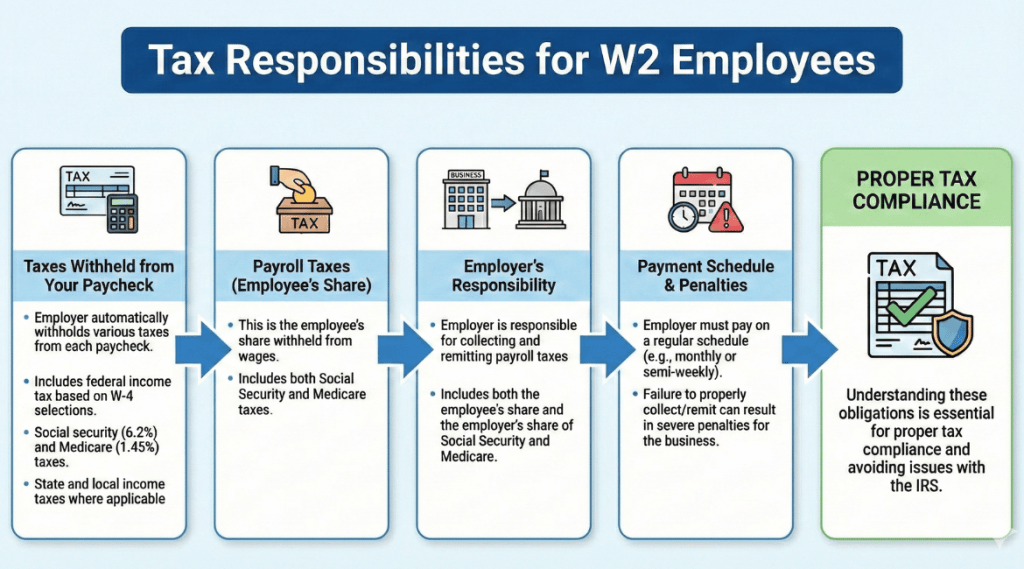
Understanding your tax obligations as a W2 employee is essential for proper tax compliance and avoiding issues with the Internal Revenue Service.
Taxes Withheld from Your Paycheck
As a W2 employee, your employer automatically withholds various taxes from each paycheck. These withheld taxes include:
Federal income tax based on your W-4 form selections
Social security taxes (6.2% of wages up to the annual limit)
Medicare taxes (1.45% of all wages)
State and local income tax (where applicable)
The amount of federal taxes and income tax withheld depends on your filing status, number of dependents, and other factors you indicate on your W-4 form.
Payroll Taxes and Employment Taxes
Your employer is responsible for collecting and remitting payroll taxes to the appropriate government agencies. These employment taxes include both the employee’s share (withheld from wages) and the employer’s share of social security and medicare taxes.
The employer must pay employment taxes on a regular schedule, either monthly or semi-weekly, depending on the total tax liability. Failure to properly collect and remit these employment tax obligations can result in severe penalties for the business.
Filing Your Tax Return
Each year, you’ll use your Form W-2 to file tax returns with the IRS. Your tax return reports your total income and calculates whether you owe additional taxes or are entitled to a refund based on the taxes withheld throughout the year.
The Form W-2 provides all the information needed to complete the income and withholding sections of your tax return. Keep this tax form in a safe place, as you’ll need it to accurately report your wages and taxes on your return.
Federal Taxes vs. Self Employment Taxes
Unlike self-employed individuals who must pay self employment taxes covering both the employee and employer portions of social security and medicare, W2 employees only pay half of these taxes. This represents a significant tax advantage, as your employer covers the other half.
Self employed individuals pay 15.3% in self employment taxes (12.4% for social security and 2.9% for Medicare), while W2 employees effectively pay only 7.65%.
Labor Laws and Legal Protections for W2 Employees
W2 employees benefit from extensive labor laws and legal protections that don’t apply to independent contractors. These laws ensure fair treatment, safe working conditions, and proper compensation.
Fair Labor Standards Act
The Fair Labor Standards Act (FLSA) establishes important protections for W2 employees, including:
Minimum wage requirements
Overtime pay provisions
Child labor restrictions
Recordkeeping requirements
Under minimum wage laws, employers must pay at least the federal minimum wage (or state minimum wage if higher) for all hours worked. The FLSA also requires overtime pay at 1.5 times the regular rate for hours worked beyond 40 in a workweek.
Both hourly workers and salaried employees may be entitled to minimum wage and overtime protections, depending on their job duties and salary level.
Workers Compensation Insurance
Workers compensation insurance provides crucial protection for W2 employees who suffer work-related injuries or illnesses. This insurance covers medical expenses, rehabilitation costs, and a portion of lost wages while the employee recovers.
Employers are required to carry workers comp insurance in most states, ensuring that injured employees receive necessary care without having to sue their employer.
Unemployment Benefits
When a W2 employee loses their job through no fault of their own, they may be eligible for unemployment benefits. These benefits provide temporary income support while the worker searches for new employment.
Unemployment insurance is funded through taxes paid by employers, and eligibility requirements vary by state.
Different Types of W2 Employees
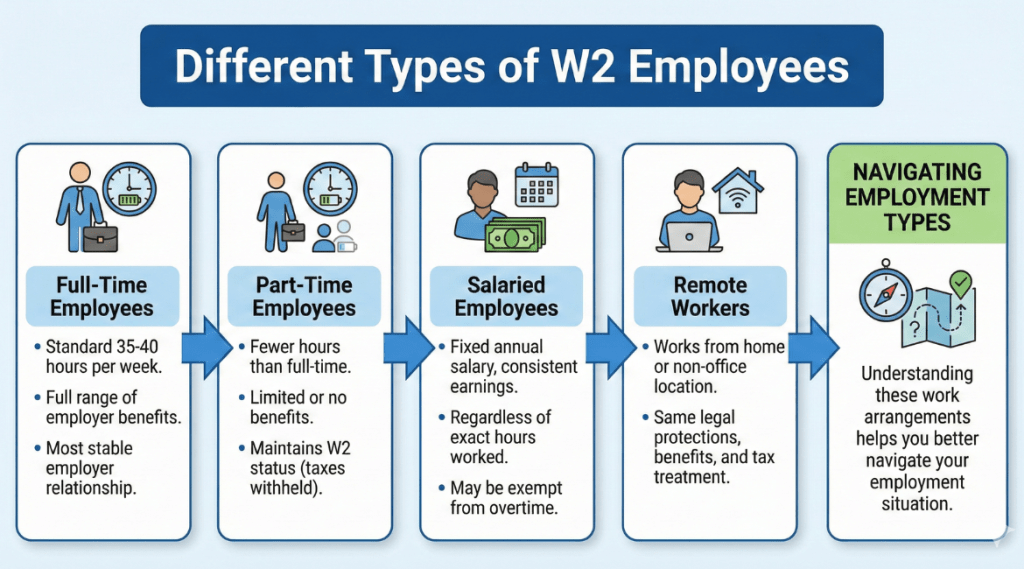
Not all W2 employees have identical work arrangements. Understanding the different types can help you better navigate your employment situation.
Full-Time Employees
Full-time employees typically work a standard schedule of 35-40 hours per week and receive the full range of employee benefits offered by their employer. These workers have the most stable employer employee relationship and often enjoy the most comprehensive benefits packages.
Part-Time Employees
Part-time employees work fewer hours than full-time staff and may receive limited or no employee benefits. However, they still maintain W2 employee status, meaning their employer withholds taxes and contributes to social security and medicare on their behalf.
Salaried Employees
Salaried employees receive a fixed annual salary rather than hourly wages. Their annual earnings remain consistent regardless of the exact hours worked each week. Some salaried employees are exempt from overtime requirements under the Fair Labor Standards Act, depending on their job duties and salary level.
Remote Workers
The rise of remote worker arrangements has changed how many W2 employees perform their jobs. A remote worker maintains their employee status regardless of whether they work from a traditional office space or from home.
Even when a remote worker performs their duties from a home office, they still receive the same legal protections, benefits, and tax treatment as on-site employees. The work performed remotely is subject to the same wage and hour laws as work performed in a traditional office setting.
How Employers Determine Worker Classification
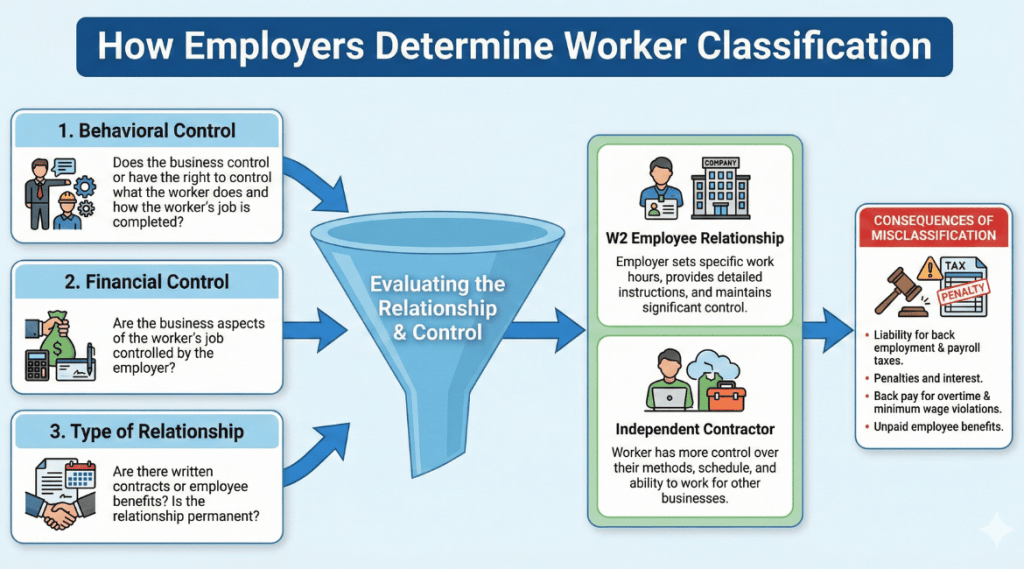
For businesses, properly classifying workers is essential for tax compliance and avoiding penalties. The Internal Revenue Service provides guidance on determining whether a worker should be classified as a W2 employee or independent contractor.
Evaluating the Relationship
Employers must evaluate the entire relationship when classifying workers. This includes examining:
Behavioral control: Does the business control or have the right to control what the worker does and how the worker’s job is completed?
Financial control: Are the business aspects of the worker’s job controlled by the employer?
Type of relationship: Are there written contracts or employee benefits? Is the relationship permanent?
Work Arrangements and Control
The level of control an employer has over work arrangements is a significant factor in classification. When an employer sets specific work hours, provides detailed instructions, and maintains significant control over how work is performed, this indicates a W2 employee relationship.
If the worker has more control over their methods, schedule, and the ability to work for other businesses, they may be properly classified as an independent contractor.
Consequences of Misclassification
Employers who misclassify employees as independent contractors can face serious consequences. They may be held liable for:
Back employment taxes
Unpaid payroll taxes
Penalties and interest
Back pay for overtime and minimum wage violations
Unpaid employee benefits
The IRS and Department of Labor actively investigate worker misclassification cases, and penalties can be substantial.
Tax Forms and Documentation for W2 Employees
Proper documentation is essential for both W2 employees and their employers. Understanding the various tax forms involved helps ensure tax compliance.
Form W-4
When you start a new job, you’ll complete Form W-4 to tell your employer how much federal income tax to withhold from your paycheck. This form considers your filing status, dependents, and other factors to determine the appropriate withholding amount.
Form W-2
As discussed earlier, the Form W-2 is the primary tax form that reports your wages and taxes withheld. Your employer must provide this wage and tax statement by January 31st of each year for tax purposes.
You’ll receive multiple copies of Form W-2:
Copy A goes to the Social Security Administration
Copy B is for filing with your federal tax return
Copy C is for your records
Copy 2 is for filing with your state tax return
Importance of Accurate Records
Maintaining accurate records of your wages, taxes, and work performed is essential for tax purposes. Keep copies of all pay stubs, tax forms, and employment documentation in case questions arise about your income or taxes withheld.
Conclusion: Understanding Your Status as a W2 Employee
Understanding what is a W2 employee is fundamental to navigating the modern workforce. As a W2 employee, you benefit from employer-provided health insurance, retirement savings plans, unemployment insurance, workers’ compensation insurance, and numerous legal protections under federal and state labor laws.
Your employer handles the complexity of withholding taxes, paying employment taxes, and contributing to Social Security and Medicare on your behalf. In exchange, you receive a steady income, comprehensive benefits, and the security of a formal employer employee relationship.
Whether you’re a full-time worker, part-time employee, salaried professional, or remote worker, understanding your classification helps you make informed decisions about your career and finances. The tax form you receive at year-end the Form W-2 serves as your official record of wages earned and taxes withheld, essential for filing your tax return accurately.
If you have questions about your worker classification or believe you may have been misclassified, consult with a tax professional or employment attorney who can review your specific situation and provide guidance based on the common law rules and IRS guidelines.
Need Help with Your Business Finances?
At Upwise Capital, we understand the financial challenges businesses face. Whether you’re managing payroll for W2 employees or looking for funding solutions to grow your business, we’re here to help.
📞 Call us today: 646-837-5522
🌐 Visit: upwisecapital.com
SHARE
Other Articles You May Want to Read






Recent Comments