


















Obtaining a business loan without tax returns is possible, especially through alternative and online lenders that look at recent revenue, cash flow, credit history, and business bank statements instead of federal tax returns when traditional documentation does not accurately reflect your company’s current financial health.
For small to medium-sized U.S. business owners who need financing but do not have up-to-date returns or whose latest tax filings do not show how the business is performing now, this can be a practical way to access working capital, equipment funding, or other financing without waiting to complete a return for the latest tax year.
However, “no tax return” does not always mean “no documents.” Borrowers should still expect to provide enough information for a lender to evaluate repayment ability, and this guide explains which loan options may be available, what documents can replace tax returns, how lenders review applications without tax records, the trade-offs to watch for, and how to compare offers before accepting funding.
Can You Get a Business Loan Without Tax Returns?

Yes, certain lenders offer business loans that do not require tax returns as part of the initial application process.
These products are generally available through online or alternative lenders rather than traditional banks. Eligibility depends on the loan type, revenue, time in business, credit, and other underwriting guidelines.
Approval is never guaranteed. Each lender has its own paperwork requirements, fees, interest rates, and funding process.
What Is a No-Tax-Return Business Loan?
A no-tax-return loan is financing underwritten without using personal or business tax returns as the primary proof of income.
The lender may analyze deposits in a business checking account, financial statements, invoices, receipts, or payment-processing records instead.
Some companies describe these products as no-doc business loans. In practice, most “no-doc” loans require minimal documentation rather than no documentation at all.
Why Do Traditional Lenders Request Tax Returns?
A tax return helps a lender review reported revenue, expenses, adjusted gross income, and profit. It may also reveal how consistently a company has performed across multiple years.
Traditional lenders can use tax documents to assess repayment ability and compare reported income with other financial records.
Tax returns are especially common in applications for bank financing and Small Business Administration programs. SBA applications can involve personal financial statements and verification of financial data, although requirements depend on the program, amount, and lender. (sba.gov)
What Do Lenders Review Instead of Adjusted Gross Income?
When tax returns are not required, lenders commonly focus on cash flow. They want to see that the business generates enough money to cover operating costs and the proposed loan payment.
A lender may review three to 12 months of business bank statements. Many applications request at least three to six recent statements.
Consistent daily or monthly deposits can help verify sales. Frequent overdrafts, negative balances, or irregular revenue may make it harder to qualify.
Lenders may also assess personal credit, existing business debt, time in operation, industry, average monthly revenue, and the intended use of funding.
How Do Bank Statement Business Loans Work?
Bank statement business loans use account activity to verify revenue instead of relying primarily on a tax filing.
The lender reviews deposits, withdrawals, average daily balances, and recurring debt payments. This information helps determine how much the company may be eligible to obtain.
For the clearest review, use a dedicated business checking account rather than combining business and household transactions in a personal account.
What Documents May Be Required?
The full list of required documents varies by lender and financing product.
Applicants may need to submit recent bank statements, a profit and loss statement, outstanding invoices, identification, and proof of business ownership, along with personal details such as an address or birth date for identity verification.
Lenders may also request an Employer Identification Number, formation documents, a voided business check, or an existing debt schedule.
Protect sensitive information during the process. Only provide a Social Security number, account details, or signing authorization through a lender’s secure application system.
Types of Business Financing Without Tax Returns
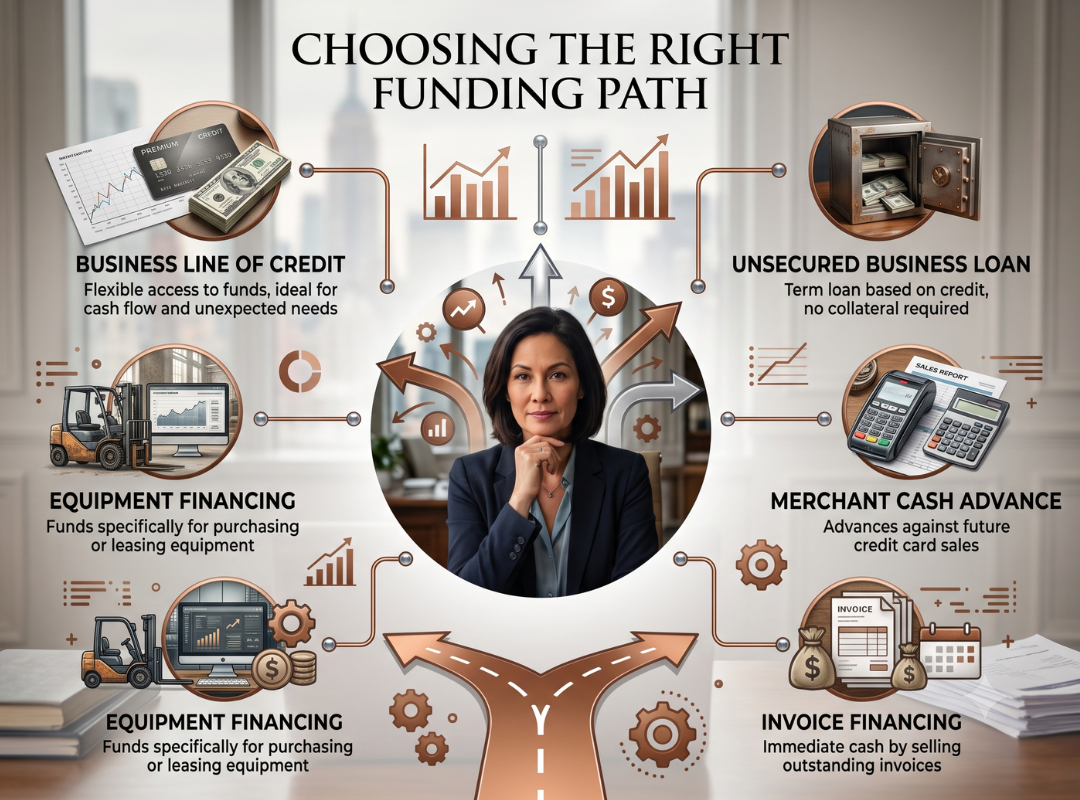
Several funding products may be available without complete tax-return documentation.
The right choice depends on how much money you need, how quickly you need it, and how the business plans to repay the balance.
Business Line of Credit
A business line of credit provides access to a set credit limit. You can draw funds when needed and repay the amount used, plus applicable interest and fees.
Lines of credit can support payroll, inventory, repairs, or future cash flow gaps. Some lenders base approval on bank statements and credit rather than tax history.
Unsecured Business Loans
Unsecured business loans do not require specific collateral, such as real estate or equipment.
Because the lender assumes greater risk, unsecured financing may have higher interest rates or stricter cash-flow requirements. A personal guarantee may still be required.
Short-Term Business Loans
A short-term loan provides a lump sum that is repaid over a relatively brief period.
Online lenders may issue decisions within one or two business days after receiving a complete application. Funding speed depends on the product, lender review, and accuracy of the documents submitted.
Business Cash Advance
A business or merchant cash advance provides funding based on anticipated revenue. Payment is often collected through a percentage of sales or fixed withdrawals.
This option can offer fast access to capital and minimal paperwork, but the total cost may be higher than that of a traditional loan. Review the factor rate, payment frequency, and total amount owed.
Invoice Financing
Invoice financing allows a business to borrow against eligible outstanding invoices.
Rather than waiting weeks for customers to pay, the company can obtain a percentage of the invoice value sooner. Fees and eligibility can depend on invoice quality and customer creditworthiness.
Equipment Financing
Equipment financing is used to purchase machinery, vehicles, technology, or other business assets.
The equipment generally serves as collateral, which may reduce the lender’s risk. Applicants may still need to provide a vendor quote, bank statements, and basic financial details.



Recent Comments